 India's Oldest National Park
A Legendary Haven for Wildlife and Conservation
Nestled in the foothills of the Himalayas in the Nainital and Pauri Garhwal districts of Uttarakhand, Jim Corbett National Park stands as a crown jewel of India's wildlife heritage. Established in 1936 as Hailey National Park, it was India's very first national park. In 1957, it was rechristened Jim Corbett National Park in memory of the legendary hunter-turned-conservationist, tracker, and author Edward James Corbett, who played a pivotal role in its establishment and protection.
Spanning a total area of over 1,288 square kilometers (including the core and buffer zones), the park is watered by the majestic Ramganga, Kosi, Mandal, and Sonanadi rivers. It earned historic global recognition when it became the very first park to launch Project Tiger in 1973, aimed at safeguarding the endangered Royal Bengal Tiger.
Established Year
Founded in 1936 as Hailey National Park; renamed in 1957.
Geographical Spread
Spans across Nainital and Pauri Garhwal districts over 520 sq. km core area.
Flora in Jim Corbett National Park
The botanical diversity of Jim Corbett is exceptionally rich due to its varied topography comprising hilly terrain, riverine belts, marshy depressions, grasslands (known locally as Chaurs), and large plateau areas.
- Sal Forests (Shorea robusta): Sal trees dominate nearly 73% of the park's total tree cover, creating dense, emerald-green canopies.
- Grasslands (Chaurs): Vast open savannahs like the Dhikala Chaur provide prime grazing grounds for herbivores and ideal hunting turf for tigers.
- Riverine Vegetation: Bordering the Ramganga river, you will find dense stands of Sheesham, Khair, and deciduous trees.
- Medicinal & Woody Climbers: Over 500 species of woody climbers, shrubs, ferns, and bamboo groves thrive across different elevation zones.
Fauna: Mammals, Birds & Reptiles
Corbett is a thriving sanctuary supporting one of the highest densities of wild mammals and bird species in the Indian subcontinent.
Apex Predators & Mammals
Home to a robust population of Royal Bengal Tigers, Indian Leopards, Asiatic Elephants, Sloth Bears, Barking Deer, Sambar Deer, Chital, and Wild Boars.
Avian Paradise (600+ Species)
A haven for bird watchers with resident and migratory species including the Crested Serpent Eagle, Great Pied Hornbill, Pallas's Fish Eagle, and Kingfishers.
Reptilian life is equally fascinating, featuring Mugger crocodiles and Gharials basking along the Ramganga river banks, along with venomous pythons and monitor lizards.
Exploring the Eco-Tourism Zones
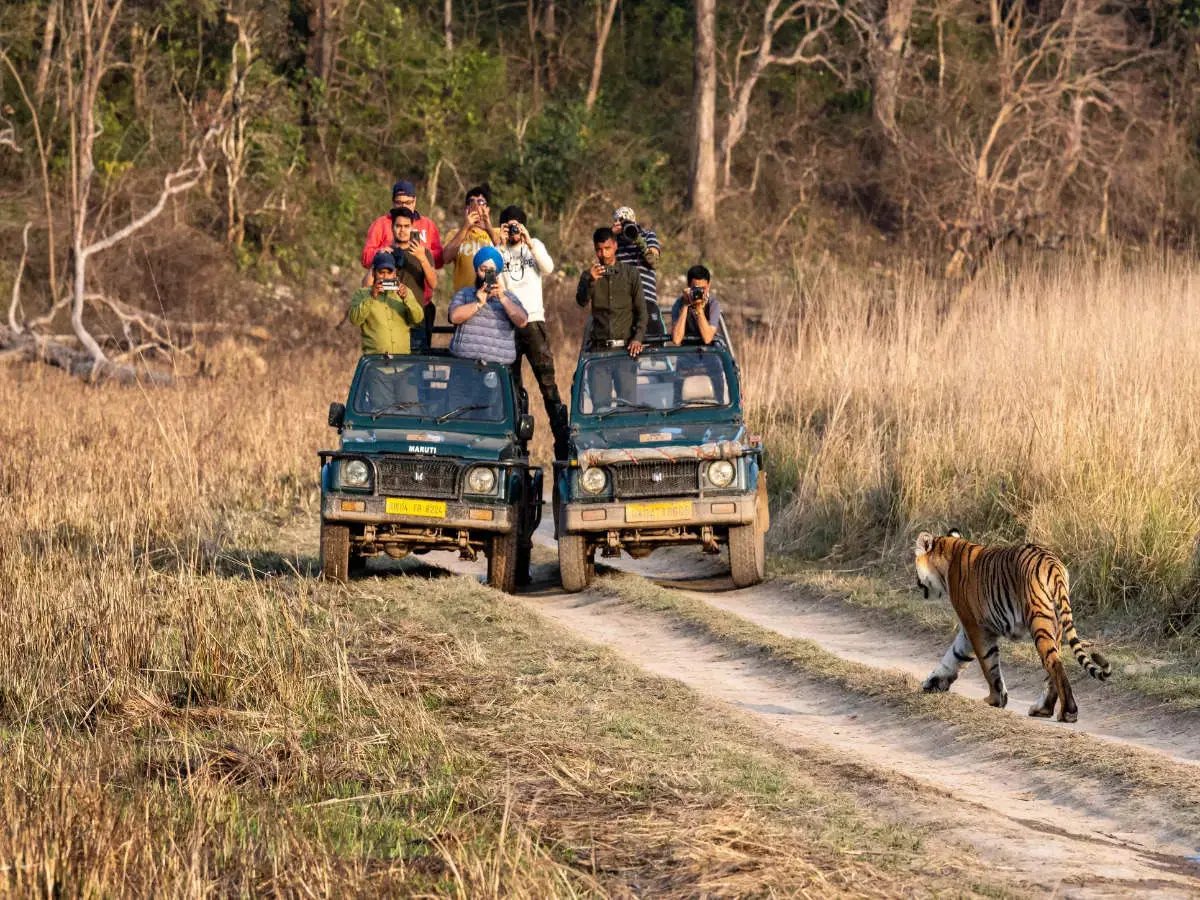
To protect its pristine ecosystem, tourism is regulated across distinct zones: Bijrani, Dhikala, Jhirna, Dhela, Phato, Garjiya, Durgadevi, and Sitabani. Visitors can explore these zones via 4x4 open Jeeps, Canters, or overnight Forest Rest House (FRH) stays.
Plan Your Corbett Trip
Book authorized Jungle Safaris or Forest Rest House night stays instantly with our experts.
Quick Facts
- Best Time to Visit: Nov to June (Open Season)
- Nearest Railway Station: Ramnagar (12 km)
- Nearest Airport: Pantnagar (82 km)
- Major Rivers: Ramganga, Kosi, Sonanadi